How to choose eyeglasses
Choose eyeglasses in three steps: decide what you need to see, find a frame that fits, then pick lenses that suit both. Style comes last, once the practical choices are settled.
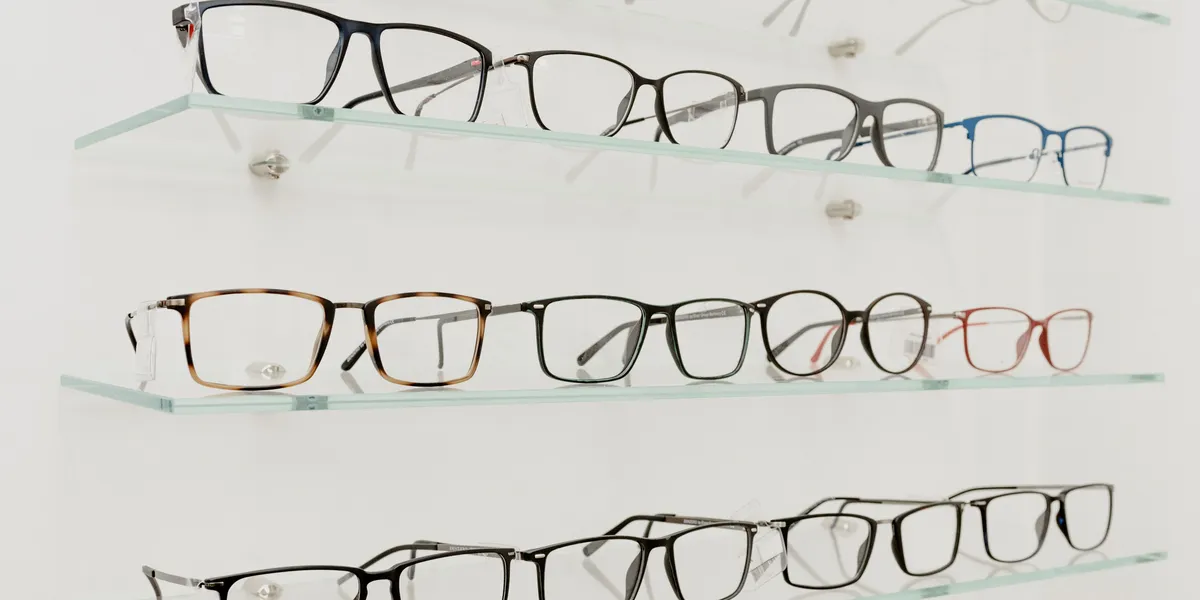
1. Begin with how you use them
Think about a normal day. Driving, reading, screen work and time outdoors can each favour a different lens. One pair may not cover everything. People who need help at more than one distance often choose progressive lenses or two single vision pairs.
- Mostly distance: single vision for distance.
- Mostly reading or close work: reading lenses.
- Distance and near in one pair: progressive lenses.
- No prescription, just protection or style: non-prescription lenses.
2. Find a frame that fits
Compare the measurements of a pair you like with ours. Total front width and bridge width matter most. Lightweight materials such as titanium and TR-90 suit long days; acetate gives richer colours and a sturdier feel.
3. Match the frame to the lens
Strong prescriptions look best in smaller frames with thinner, higher index lenses. Progressive lenses need enough lens height for all three zones. Rimless and semi-rimless frames show the lens edge, so thickness is more visible.
4. Choose lens type and coatings
Clear lenses suit most people. Blue-light filtering, photochromic and tinted options add comfort for particular habits. Read what each does before adding it; extras are only useful if you will notice them.
5. Then choose the style
Pick a shape and colour you enjoy wearing. Contrasting shapes often flatter, but your own taste matters more than any rule. Dark colours read as classic and steady; clear and light colours feel lighter on the face.
Before you check out
Review the frame colour, the lens summary, each eye's values and your PD. If you do not have your prescription to hand, you can send it later and we review it before production.
Materials at a glance
| Material | What to expect |
|---|---|
| Acetate | Rich colour and pattern, a solid feel, adjustable with gentle heat by an optician. |
| TR-90 | A flexible, very light plastic that copes well with everyday knocks. |
| Metal | Thin rims and adjustable nose pads; finishes vary from polished to brushed. |
| Titanium | Very light and strong, a good choice for all-day wear and sensitive skin. |
One pair or two
A single pair is simplest, but it is not always the most comfortable. People who drive a lot often prefer a separate pair of prescription sunglasses. People who read for long periods may find a dedicated reading pair easier than progressives. If you have one main activity, choose the lens that serves it best and add a second pair later if you need it.
If you already wear glasses
Your current pair is the best reference you have. Note what you like about it and what bothers you: a frame that slides, lenses that feel too small for reading, a colour you never tire of. Keep the measurements of the parts that work and change only what does not. That is usually quicker than starting from a blank page.
Related guides
Find your fit
Compare your current pair with ours.
Single vision lenses
The most common lens type.
Rectangle glasses
A versatile everyday shape.
Choosing questions
Should I choose the frame or the lenses first?
Know your prescription type first, then choose a frame that fits and suits that lens. Lens options come next.
Are lightweight frames worth it?
If you wear glasses all day, yes. Titanium and TR-90 frames put less weight on the bridge.
Can I order without my prescription?
Yes. Choose to send it later in the lens step; we review it before your lenses are made.
Find your next frame
Compare shapes and measurements, then explore suitable lens options.
Shop eyeglasses